The First Emergency Rescue Robot Competition Launched in Shenzhen
发布时间:2026-04-30编辑:Zbk7655阅读(1000)
The First Emergency Rescue Robot Competition Launched in Shenzhen
Technology Answers the Call of Life, Five Events Released Globally
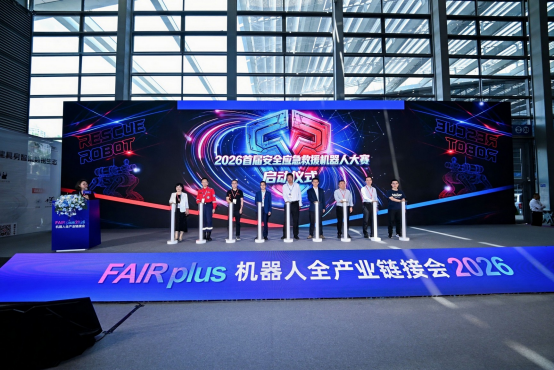
On April 22, the First Safety and Emergency Rescue Robot Competition, themed “Technology for Good, Life First”, officially kicked off at the FAIR plus 2026 Robot Industry Link Conference held at the Shenzhen Convention and Exhibition Center. Instead of flashy demonstrations, the competition features highly simulated extreme rescue scenarios, issuing an open call to universities, research institutes, and startups worldwide.
Against the backdrop of frequent natural disasters and intertwined urban risks, there is an unprecedented urgent demand for intelligent and unmanned rescue equipment. The competition is guided by the Research Center of the Ministry of Emergency Management of the People’s Republic of China, hosted by the University of Emergency Management, organized by the Guangdong Federation of Academicians, Shenzhen Robot Association, Shenzhen Public Welfare Rescue Volunteer Federation, CETC Hikvision Wuxi Technology Co., Ltd., and Shenzhen Industrial Space Development Co., Ltd., and supported by the Shenzhen Emergency Safety Industry Association and Beijing Pinglan Public Welfare Foundation. During the parallel forum “Special Robots: Focusing on Emergency Rescue and Exploring Human-Machine Collaboration” that afternoon, the five highly anticipated practical events were officially unveiled.
Addressing Pain Points: From “Lab Demonstrations” to “Rubble Rescue”
At the forum, experts cut to the chase and directly pointed out the weaknesses of current emergency rescue robots.

Zhong Ruixing, First Secretary of the Joint Party Committee of Shenzhen Science and Technology Social Organizations, stated in his speech that extreme weather and disasters are forcing the upgrading of traditional emergency response methods. Emergency rescue robots should not be delicate lab models but “hardcore comrades” capable of entering fire scenes, deep waters, and collapsed ruins, serving as a barrier to protect rescuers. He noted that Shenzhen boasts the most complete robot industry chain in China, and the competition aims to drive the industry’s upgrade from consumer-grade to “specialized and practical-grade”.

Regarding event design, Wang Pinghui, a professor at Southern University of Science and Technology and forum moderator, compared emergency rescue to the “ultimate test ground” for robot technology. He emphasized that the five events—from mountain delivery to underwater search—cover the most challenging disaster scenarios, testing technical foundations under extreme conditions of no roads, no network, and no power.

Han Zhenfeng, Executive Deputy Director of the Confined Space Emergency Robot Laboratory at the National Institute of Natural Hazards, Ministry of Emergency Management, summarized the current technological dilemma: “cannot enter, cannot see clearly, cannot operate”. Yang Ruiyang, Postdoctoral Senior Engineer at the Big Data Center of the Ministry of Emergency Management, presented data: over 90% of fire robot operations still rely on manual remote control under smoke and strong light interference; equipment failure rates exceed 40% in high-altitude and cold environments. Existing wheeled and tracked robots are often helpless against layered ruins and complex industrial and trade environments.
Pain points are also breakthroughs. Liu Yongtao, Professor at the University of Emergency Management and Director of the Hebei Key Laboratory of Special Robots for Work Safety and Emergency Response, revealed that China is accelerating the construction of the world’s first embodied special robot training and certification base. Future robots should not be “remote-controlled toys” but intelligent comrades that are “easy to communicate with and simple to operate” for rescuers, achieving deep collaboration of “human decision-making, machine risk-taking”. Hu Weijian, Researcher at the Search and Rescue Center of the Ministry of Emergency Management, stressed that evaluation criteria must return to “practical and effective”, enabling technology to iterate through rigorous tests.
Turning to global humanitarian efforts, Hu Huihua, China Liaison Coordinator of the United Nations Office for the Coordination of Humanitarian Affairs (OCHA), shared sobering figures: at least 326 humanitarian workers were killed globally in 2025. She argued that emergency robots are shifting from “future concepts” to “essential needs”, becoming the first “eyes” and “hands” to enter dangerous areas. China’s advantages in manufacturing and supply chains should translate into technological warmth that is “affordable and accessible” to the world.
Green Power and Corporate Strength: From Energy to Complete Machines
As the title sponsor of the competition, Shenzhen Huabao New Energy Co., Ltd. highlighted a frequently overlooked link in rescue operations: energy. For robots operating in disaster-stricken areas, electricity is their “heart”. A leader in portable energy storage with cumulative sales exceeding 7 million units, the company’s products are sold in over 50 countries worldwide. It has promptly donated solar-charged outdoor power supplies for on-site rescue support in multiple disasters, including the Xigaze earthquake in Xizang, California wildfires in the U.S., and the Noto Peninsula earthquake in Japan.
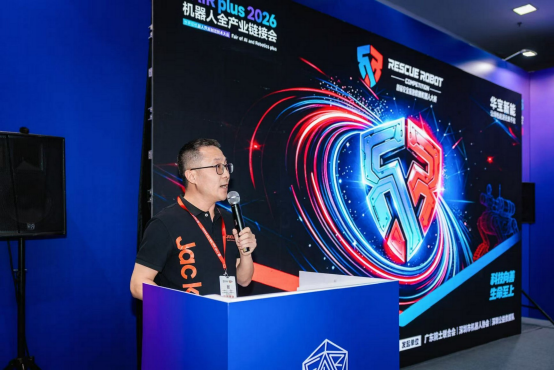
Representatives from CETC Hikvision, Zhiyuan Kuotuo, and other enterprises also presented special robot solutions for fire inspection and other scenarios, demonstrating the industry chain’s rapid response to practical needs.
Five “Hardcore” Events: Simulating Real-World Challenges
According to the organizing committee, the competition’s events are designed to target frontline rescue pain points, with all tasks conducted under simulated extreme conditions of no roads, no network, and no power.
Precision Material Delivery in Post-Disaster Mountainous Areas: Robots must autonomously traverse 300 meters of complex terrain with steep slopes, gravel, and dynamic water spray interference, accurately delivering 20 kg of emergency supplies twice in succession.
Demolition and Opening of Narrow Pipe Passages in Collapsed Buildings: Simulating a desperate situation deep in ruins, robots must enter a 1-meter-diameter pipe and perform millimeter-level demolition of concrete slabs in a tiny triangular work area; any misoperation risks “secondary collapse”.
Precise Underwater Positioning and Buoyancy Rescue in Floods: In turbid waters full of fishing net entanglements, robots must locate targets via sonar-vision fusion and accurately mount and inflate buoyancy bags for towing.
Large-Scale AI Reconnaissance and Precision Airdrop After Disasters: Drones must distinguish humans from heat interference sources via AI recognition under strong turbulence, dropping supplies into designated buckets from high altitude with a deviation of no more than 100 mm.
High-Rise Building Fire Rescue: A three-dimensional operation requiring ground, climbing, and aerial robots to collaboratively complete the full chain of tasks—fire source positioning, load climbing, window breaking and smoke exhaust, and three-dimensional fire fighting—in smoke-filled communication blind spots.
Ecosystem Co-Construction: From Competition to Global Impact
During the forum, Beijing Pinglan Public Welfare Foundation shared the upcoming “China Civilian Ocean-going Medical Rescue Vessel” project. The 5,000-ton medical ship will conduct humanitarian aid missions in Southeast Asia, Africa, and other regions, marking a milestone for civilian rescue forces to go global. Zhu Zhaokui, Deputy General Manager of CETC Hikvision Wuxi Technology Co., Ltd., stated that the company will deeply participate in post-competition technology incubation, helping emergency robots transition from “usable” to “excellent”.
The global registration channel for the competition is now open. Preliminary plan submissions are due by June 31, 2026, and the finals are scheduled to be held in Shenzhen in October 2026. Winners will gain direct access to top industry chain resources and their solutions will be recommended to national emergency management authorities as demonstration products for national-level drills.
As the organizing committee noted, the competition aims for more than a technological contest. It hopes to inspire more young scientific and technological talents to fulfill the promise of “technology protecting life” through extreme challenges facing life and death, and jointly create a new paradigm of human civilization in the AI era.
If you are interested in consulting about participation, please feel free to contact the organizing committee: 0755-86399999Business Cooperation
标签: